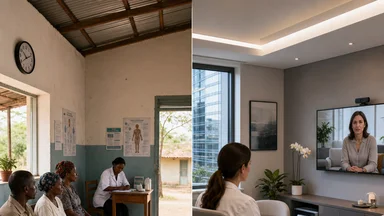
Psychiatry residency training in the United States requires at least 800 hours of psychotherapy experience, but how those hours are spent is a matter of debate. A survey of roughly 200 residents across 20 programs found that nearly 40% want more training in cognitive behavioral therapy (CBT), while a similar proportion feel their programs already offer adequate balance. The split reflects deeper disagreements about what makes a competent psychiatrist—and what patients actually need.
A Training Rift Emerges in Psychiatry Residencies
The Accreditation Council for Graduate Medical Education (ACGME) mandates that residents complete a minimum of 800 therapy hours over four years. However, the council does not specify how many of those hours must be devoted to any particular modality. As a result, programs vary widely. Some academic medical centers offer dedicated CBT tracks with supervised cases, while community-based programs often require residents to accumulate hours through general outpatient clinics that mix supportive, psychodynamic, and eclectic approaches.
At university hospitals, residents may spend up to half their therapy time on CBT, often with close supervision from faculty who are board-certified in the modality. In contrast, residents at community sites report that CBT training is squeezed into elective rotations or lunchtime seminars. One resident at a large community program described “learning CBT from a textbook and a few online modules,” while logging most therapy hours with patients who present with complex trauma or personality disorders—conditions for which CBT protocols are less established.
This disparity has practical consequences. Graduates from CBT-heavy programs are more likely to pursue board certification in CBT through the American Board of Psychiatry and Neurology, a credential that may open career doors. Graduates from programs that emphasize volume over modality often feel less prepared to deliver evidence-based treatments for common conditions like depression and anxiety. The rift is not just about preference; it is about what kind of psychiatrist the training system is producing.
Interviews with program directors reveal a similar divide. Some argue that the 800-hour requirement is already too low and that adding modality-specific mandates would strain already limited supervision resources. Others counter that without structured CBT training, residents graduate with gaps in their ability to treat the most common mental health disorders. The disagreement is unlikely to resolve soon, as the ACGME reviews its psychotherapy requirements only periodically.
Why Some Trainees Push for More CBT
Cognitive behavioral therapy has the strongest evidence base for conditions such as major depressive disorder and generalized anxiety disorder, with effect sizes in meta-analyses consistently in the moderate to large range. For residents who want to practice in an evidence-based manner, CBT offers clear protocols that are easier to learn and supervise compared to longer-term psychodynamic approaches. Manualized treatments like Beck's cognitive therapy or behavioral activation provide a structured framework that can be taught in a relatively short time.
Residents who favor more CBT training often report seeing faster improvement in their patients. A third-year resident at a university program noted, “When I use CBT for panic disorder, I can see measurable progress within six to eight sessions. That’s rewarding for me and the patient.” This rapid feedback loop can be motivating, especially early in training when confidence may be low. Additionally, board certification in CBT is available and recognized by many employers, giving residents who invest in CBT a potential career advantage.
Supervisors at academic centers tend to be CBT-focused themselves, creating a training environment that reinforces the modality. At some institutions, residents can choose a CBT track that includes dedicated didactics, supervised cases, and even research opportunities. These tracks produce graduates who are highly skilled in CBT but may have less exposure to other therapeutic approaches. For residents who already know they want to work in outpatient private practice or integrated primary care settings, this specialization can be a strong draw.
However, the push for more CBT is not universal. Even among residents who value evidence-based practice, some worry that an overemphasis on CBT could crowd out training in other important modalities. The debate is not simply about hours; it is about what kind of therapist a psychiatrist should be. As one resident put it, “I don’t want to be a one-trick pony. My patients don’t come with a single diagnosis.”
The Case for Broad Therapy Exposure
Community mental health clinics serve a patient population that often presents with complex comorbidities, including personality disorders, chronic trauma, and substance use. For these patients, pure CBT protocols may be less effective or even counterproductive. Psychodynamic and supportive therapies, while less studied in randomized trials, have a long clinical tradition and may be better suited for building therapeutic alliance and addressing deep-seated relational patterns.
Program directors at community sites argue that broad therapy hours build flexibility. A resident who logs 800 hours across diverse patient presentations learns to adapt their approach in real time—something manualized training cannot fully teach. “Volume builds competence,” one director said. “You learn to think on your feet, to use whatever works in the moment.” This argument resonates with the ACGME’s emphasis on general competence rather than modality-specific proficiency.
Yet the same directors acknowledge that many residents graduate without enough CBT supervision. A 2024 survey by the American Association of Directors of Psychiatric Residency Training found that fewer than half of programs require a minimum number of CBT cases. Some residents complete residency having never conducted a full course of CBT under supervision, which leaves them unprepared to use the approach independently. The tension between breadth and depth is real, and neither side has a monopoly on evidence.
Supporters of broad exposure also point out that the evidence base for CBT is strongest in controlled research settings, where patients are often less complex than those seen in community clinics. Effect sizes shrink in real-world effectiveness trials, and some patients do not respond to CBT at all. A flexible therapist who can draw from multiple modalities may be more effective overall, even if no single technique is perfectly evidence-based for every patient.
Evidence Gaps Fuel the Disagreement
No randomized trial has directly compared different training approaches in psychiatry residencies. The available evidence is mostly retrospective and observational, making it difficult to isolate the effect of CBT training hours from other factors like site resources, patient mix, and supervisor expertise. A 2022 study found that residents who completed a CBT rotation had better depression outcomes in their patients, but the effect size was small and confounded by the fact that those residents were at better-resourced sites.
The Residency Review Committee for Psychiatry has noted wide variation in CBT hours across programs, with some residents reporting fewer than 20 hours of direct CBT supervision over four years. This variation has led to calls for competency-based metrics rather than simple hour counts. Some experts suggest that residents should demonstrate proficiency in at least two evidence-based modalities, including CBT, before graduation. But how to measure proficiency—through observed clinical exams, case logs, or patient outcomes—remains unresolved.
Without stronger evidence, the debate continues largely on ideological grounds. Proponents of mandatory CBT hours cite the strong evidence base for the therapy itself, while opponents argue that training models should reflect the diversity of clinical practice. The lack of data means that program directors must rely on local expertise and tradition when designing curricula, leading to the wide variation seen today.
Some researchers have proposed a national registry to track resident training outcomes, including patient symptom scores, to compare different training models. Such a registry would require significant funding and coordination, and it is unclear whether the field has the appetite for such an undertaking. In the meantime, residents and faculty must navigate the current system with incomplete information.
Resource Disparities Across Training Sites
University hospitals typically have dedicated CBT clinics staffed by specialists who supervise residents. These clinics often run structured training programs with weekly didactics and live observation. In contrast, community-based residency programs rely on generalist faculty who may have limited CBT experience. Rural programs face even greater challenges, with difficulty recruiting any psychotherapy supervisors at all, let alone CBT specialists.
Funding for psychotherapy training has been declining nationally. Many programs have seen cuts to faculty positions and training stipends, forcing them to prioritize clinical productivity over education. Some community programs have turned to online CBT modules as a stopgap, allowing residents to learn the basics of CBT independently. While these modules can teach core concepts, they do not replace live supervision, which is critical for developing clinical skills.
The resource gap has equity implications. Residents at well-funded academic centers graduate with more specialized training and better career prospects, while those at community programs may feel less prepared. This disparity mirrors broader patterns in medical education, where access to CBT in rural clinics lags behind urban hospitals. The training environment thus reproduces the same access gaps that patients face.
Some programs have attempted to pool resources through regional consortia, sharing faculty expertise and offering joint didactics. These efforts are promising but limited by funding and logistics. Until systemic investment in psychotherapy training increases, the disparity between training sites is likely to persist.
A Middle Ground Emerges in Integrated Curricula
A growing number of programs are developing integrated curricula that blend CBT principles into all therapy training, rather than teaching CBT as a separate module. For example, the University of Michigan's psychiatry residency program has implemented a "CBT-infused" curriculum where residents learn transdiagnostic techniques like behavioral activation across all clinical rotations. These programs emphasize techniques that can be applied across diagnoses and are easier for generalist supervisors to teach. Residents learn to identify and modify core cognitive and behavioral patterns without rigid adherence to a single protocol.
Some programs offer elective tracks that allow residents to deepen their CBT skills without sacrificing broad exposure. For example, a resident might complete a two-month intensive CBT rotation in their third year, supplemented by weekly CBT supervision throughout the rest of training. This approach provides depth for those who want it while maintaining the breadth required by the ACGME. Early data from pilot programs, including a study at the University of Washington, suggest improved resident satisfaction and better self-reported competence in CBT.
Another innovation is the use of brief CBT models adapted for primary care settings, where many psychiatry residents will eventually work. These models emphasize practical skills that can be delivered in 20- to 30-minute sessions, making them more feasible in busy clinics. Residents learn to assess and treat common conditions like insomnia, mild depression, and anxiety using brief interventions that are evidence-based and time-efficient.
The integrated approach is not without critics, who argue that diluting CBT into generic principles may weaken its effectiveness. However, for programs that lack the resources for a full CBT track, integrated curricula offer a pragmatic compromise. As one program director noted, “We can’t give everyone a year of CBT, but we can make sure every resident knows how to do behavioral activation and cognitive restructuring. That’s better than nothing.”
What This Means for Future Psychiatrists
Applicants to psychiatry residency programs should evaluate the balance of therapy training before matching. Those who want to specialize in CBT should seek programs with dedicated tracks or strong supervision in that modality. Others who prefer a broad foundation may choose programs that emphasize volume and diversity of cases. The disparities in access to structured training are similar to those seen in other areas of medicine, and residents should be aware that their training site will shape their future practice.
Board certification options may shift training priorities. The American Board of Psychiatry and Neurology now offers a subspecialty certification in CBT, and as more psychiatrists pursue this credential, programs may feel pressure to offer more structured CBT training. State licensing boards could also mandate specific therapy hours for licensure, though such requirements are rare at present. Patient advocacy groups are increasingly pushing for evidence-based psychotherapy access, which may lead to policy changes that affect training requirements.
The debate over CBT training versus broad therapy hours mirrors broader tensions in medical education between specialization and generalism, between evidence and experience, and between academic ideals and community realities. There is no easy answer, and reasonable experts disagree. What is clear is that the current system produces uneven outcomes, and residents must navigate it with their own career goals and patient populations in mind.
Ultimately, the goal of psychiatry training is to produce competent clinicians who can help patients recover. Whether that is best achieved through more CBT hours or more diverse therapy exposure remains an open question—one that will be resolved not by fiat, but by evidence, resources, and the evolving needs of patients. As the field moves forward, will the next revision of ACGME requirements tip the scale, or will local innovation render the debate moot?
This article is for informational purposes only and does not constitute professional medical advice. Training decisions should be made in consultation with program directors and accreditation bodies.