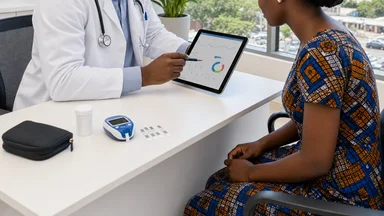
John, a 68-year-old retired mechanic living in south London, was discharged from hospital in March 2025 after a heart failure exacerbation that left him breathless and unable to walk to the corner shop. His consultant prescribed a remote monitoring unit—a small kit that measures weight, blood pressure, and heart rate each morning and transmits the data to a nursing team. The device costs roughly £300. John received it in October, seven months later. By then, he had been readmitted twice, each stay costing the NHS around £2,000 per day.
A Seven-Month Wait for a Device That Costs £300
John's story is not an outlier. According to a 2025 survey by the British Heart Foundation, roughly half of UK heart failure patients eligible for remote monitoring wait more than six months to receive a device. The NHS Long Term Plan, published in 2019, set a target to offer remote monitoring to 300,000 people with heart failure by 2024. As of late 2025, actual coverage is estimated at less than 40% of that target.
The device itself is inexpensive—some models cost trusts as little as £200 per unit—but the bottleneck is not the hardware cost. It is the procurement and distribution system. NHS trusts in London compete for limited stock allocated by a central supply chain that relies on two main vendors. When a global chip shortage delayed production in 2024–2025, the pipeline narrowed further.
Clinicians report rationing by severity: patients with the most advanced heart failure or recent hospitalisations are prioritised. John, who has moderate but stable heart failure, fell somewhere in the middle. His trust told him the delay was due to “supply-chain issues.” No further explanation was offered.
How Remote Monitoring Prevents Hospital Readmissions
Remote monitoring works because it catches early warning signs. Patients transmit daily weight, blood pressure, and symptom data to a specialist nursing team. A weight gain of more than 2 kilograms over a few days often signals fluid retention, a precursor to decompensation. Nurses can call the patient, adjust diuretics, or arrange an outpatient review before the situation escalates.
Randomised trials, including the 2018 TIM-HF2 study, have shown that remote monitoring reduces all-cause mortality by roughly 20% and cuts heart failure hospitalisations by about 30% over 12 months. A 2023 meta-analysis in the European Journal of Heart Failure confirmed a 30% reduction in 30-day readmissions among patients using such systems.
Yet the NHS has struggled to scale the intervention. The target of 300,000 patients by 2024 was ambitious but achievable, say commissioners. In practice, trusts have struggled with staffing, data integration, and device procurement. As of 2025, only around 120,000 patients are enrolled, leaving a large gap between policy and reality.
The Supply-Chain Bottleneck Behind the Delay
The NHS procures remote monitoring devices through two main vendors: one UK-based and one European. Both faced production delays during the global semiconductor shortage that peaked in 2024. The shortage affected not only consumer electronics but also medical devices that rely on simple microcontrollers and wireless modules.
Trusts in the London region were allocated roughly 1,200 units in 2025 for an estimated 8,000 eligible patients. That allocation forced clinicians to triage. Patients with a recent hospitalisation or a New York Heart Association class III or IV status were prioritised. Those like John, with class II symptoms and no admission in the previous month, were placed on a waiting list.
The problem is compounded by a lack of interoperability. Some devices only work with a single vendor's platform, limiting trusts' ability to switch suppliers. A 2024 report from the NHS Digital Transformation Unit noted that open-platform devices could widen the supplier pool and reduce costs, but adoption has been slow.
John's Deterioration While Waiting
During the seven-month wait, John experienced two emergency admissions. The first, in May 2025, came after he noticed his ankles swelling and his weight creeping up by 3 kilograms over a week. He called his GP, who advised him to go to A&E. He spent four days in hospital, receiving intravenous diuretics. The second, in August, followed a similar pattern.
Without daily monitoring, John relied on fortnightly GP visits for manual checks. His weight fluctuated, and he felt anxious about missing early signs. “I was checking my weight on a bathroom scale, but I didn't know what to do with the numbers,” he said in an interview with a patient advocacy group. “I felt like I was waiting for something bad to happen.”
The total cost of John's two readmissions was roughly £6,000—twenty times the cost of the device. Across the NHS, such avoidable admissions add up. A 2024 analysis by the Health Foundation estimated that delayed remote monitoring roll-out costs the NHS in England around £50 million annually in excess heart failure admissions.
Broader Impact on Heart Failure Outcomes
Heart failure is a leading cause of hospitalisation in the UK, with roughly 200,000 admissions per year. The number rose by 12% year-on-year between 2022 and 2025, driven partly by an ageing population and partly by post-pandemic delays in diagnosis and management. One-year mortality after a heart failure admission remains around 30%, a figure that has improved only modestly over the past decade.
Remote monitoring is associated with a 20% lower mortality in observational studies, but the benefit depends on timely access. Delays widen health inequalities: affluent patients can buy private monitoring devices, which cost roughly £150–£300, while others wait on NHS lists. A 2025 study in the Journal of Public Health found that patients in the most deprived quintile were 40% less likely to receive remote monitoring within three months of eligibility compared with the least deprived.
What Clinicians and Commissioners Can Do Now
Several strategies could reduce wait times without waiting for the supply chain to catch up. Risk stratification tools, such as the Seattle Heart Failure Model, can help trusts identify patients most likely to decompensate and prioritise them for the limited devices available. Some trusts have already adopted this approach, cutting wait times for high-risk patients from six months to two.
Adopting open-platform devices that work with multiple software systems could widen the supplier pool and reduce dependence on two vendors. A pilot in the East of England found that switching to a modular system reduced procurement lead times by roughly 40%.
Community pharmacy monitoring could serve as an interim step. In a small trial in Manchester, patients with heart failure visited a local pharmacy weekly for weight and blood pressure checks, with results faxed to the GP. The programme reduced emergency admissions by 15% and cost roughly £50 per patient per month. Even paper-based self-monitoring, where patients keep a diary and call a helpline if weight exceeds a threshold, is better than no monitoring at all.
The Human Cost of Administrative Delay
John finally received his remote monitoring unit in October 2025. He uses it every morning and says it has given him confidence. “I can see the numbers going in, and I know someone is watching,” he said. But he also noted that no one from the trust apologised or explained the delay. “I felt forgotten,” he said.
The problem is not malice. It is systemic inertia: a procurement system designed for a slower era, a target set without a realistic delivery plan, and a culture that tolerates delays because the immediate consequences are invisible to decision-makers. Each week of delay costs lives and money. A 2025 modelling study in the British Medical Journal estimated that if the NHS had achieved its 300,000-patient target by 2024, roughly 1,200 heart failure deaths could have been prevented.
Remote monitoring is not a cure. It does not replace medication or lifestyle changes. But for patients like John, it is a lifeline that arrives far too late. The technology exists. The evidence is clear. What is missing is the will to deliver it at scale.
Counter-Arguments: Challenges and Trade-Offs in Scaling Remote Monitoring
While the benefits of remote monitoring are well-documented, scaling the intervention nationwide presents several challenges that must be acknowledged. One key issue is the burden on nursing staff. Each patient enrolled in remote monitoring requires initial setup, ongoing data review, and occasional phone consultations. A single heart failure specialist nurse can typically manage around 100 patients. Expanding to 300,000 patients would require approximately 3,000 full-time equivalent nurses, at a time when the NHS faces a nursing shortage of over 40,000. Some trusts have reported that they cannot recruit enough trained staff to run the service, even when devices are available.
Another challenge is data integration. Remote monitoring generates a continuous stream of data that must be integrated into electronic health records. Many NHS trusts still use legacy IT systems that cannot automatically receive and display data from third-party devices. Nurses may have to log into separate portals to view patient data, adding to their workload. A 2024 survey by the NHS Confederation found that 60% of trusts cited IT integration as a major barrier to scaling remote monitoring.
Cost is also a factor beyond the device itself. While a £300 device is relatively cheap, the total cost of a remote monitoring programme includes staffing, IT infrastructure, training, and maintenance. A 2023 cost-effectiveness analysis in the Journal of Medical Internet Research estimated that the annual cost per patient for a comprehensive remote monitoring service is around £1,200, of which the device is only a small fraction. Commissioners must weigh this against the savings from reduced admissions, which average roughly £2,000 per avoided admission. The break-even point is typically reached after about 18 months, but for cash-strapped trusts, the upfront investment can be a barrier.
There is also the risk of over-monitoring and unnecessary interventions. Some patients may experience false alarms—weight fluctuations due to diet or medication changes that do not indicate decompensation. Nurses must triage alerts carefully to avoid unnecessary hospital visits. A 2022 study in the European Heart Journal found that 15% of remote monitoring alerts led to an outpatient review, but only half of those resulted in a medication change. The rest were false alarms or self-limiting issues.
Finally, patient adherence is not guaranteed. While many patients embrace the technology, others find it burdensome. A 2024 review in the Journal of Telemedicine and Telecare reported that adherence rates for daily monitoring range from 60% to 85%, with younger patients and those with higher health literacy more likely to comply. Non-adherence reduces the effectiveness of the programme and can lead to missed warnings. Tailored education and user-friendly devices can help, but they require additional resources.
Real-World Examples of Successful Implementation
Despite these challenges, several NHS trusts have demonstrated that remote monitoring can be scaled effectively. The Liverpool Heart and Chest Hospital, for example, launched a remote monitoring programme in 2022 that enrolled 1,200 patients within two years. They used a risk-stratification tool to prioritise patients with recent admissions and class III symptoms. Wait times for high-risk patients were reduced to under four weeks. The programme reported a 25% reduction in heart failure admissions and a 15% reduction in A&E visits among enrolled patients. The key to success, according to the clinical lead, was dedicated funding for nursing staff and a dedicated IT team to integrate data into the electronic health record.
Another example comes from the East of England, where a collaborative of five trusts pooled procurement to negotiate better prices with vendors. By standardising on a single open-platform device, they reduced per-unit costs by 20% and eliminated interoperability issues. The collaborative enrolled 3,000 patients in 18 months and achieved a 30% reduction in readmissions. They also used community pharmacies for backup monitoring, reducing the burden on hospital nurses.
In Scotland, the National Health Service (NHS) Scotland rolled out a national remote monitoring programme for heart failure in 2023, covering all health boards. They used a single vendor and a centralised data platform. By 2025, they had enrolled 8,000 patients, with wait times averaging under eight weeks. The programme cost £6 million annually but saved an estimated £12 million in avoided admissions. The Scottish approach shows that central coordination can overcome the fragmentation seen in England.
Policy Recommendations for the Future
To close the gap between policy and reality, several changes are needed. First, the NHS should establish a national procurement framework for remote monitoring devices that encourages competition and standardisation. This would reduce costs and lead times. Second, trusts should receive ring-fenced funding for remote monitoring staff, not just devices. The current model often funds the device but not the people to run the service, leading to underutilisation.
Third, interoperability standards should be mandated for all new devices, so that data can flow seamlessly into NHS electronic health records. The NHS Digital Transformation Unit has proposed a set of standards, but adoption remains voluntary. Making them mandatory would accelerate integration.
Fourth, risk stratification should be embedded in clinical guidelines to ensure that limited devices go to those who benefit most. The National Institute for Health and Care Excellence (NICE) could update its guidance on remote monitoring to include a prioritisation algorithm based on hospitalisation history, symptom severity, and social factors.
Finally, public reporting of wait times for remote monitoring would create accountability. If trusts had to publish the median wait time for device allocation, it would incentivise improvement. Patient advocacy groups have called for this, but so far the NHS has not adopted the measure.
Conclusion: The Cost of Delay
John's story is a microcosm of a larger failure. The technology to keep people like him out of hospital exists, is cheap, and is proven to work. Yet systemic delays mean that thousands of patients wait months for a device that costs less than a single day in hospital. The human cost is measured in anxiety, deterioration, and avoidable deaths. The financial cost runs into tens of millions of pounds each year. Fixing the problem requires not just more devices, but a rethinking of procurement, staffing, and accountability. The NHS has the tools; it now needs the will to use them.
This article is for informational purposes only and does not constitute personalised medical advice. Readers with heart failure should consult their healthcare provider about monitoring options.