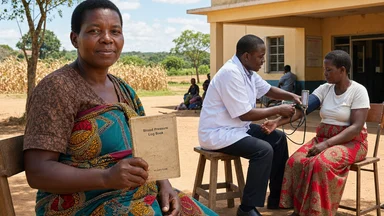
Asthma affects more than 25 million people in the United States, and for those living in rural areas, the burden is disproportionately heavy. Hospitalization rates for asthma are higher in rural communities, and emergency department visits are more frequent. One of the most effective tools for managing asthma—the written action plan—remains out of reach for roughly 80% of rural patients. A simple document that tells a patient when to increase medication, when to seek help, and how to avoid triggers can reduce exacerbations by as much as 40%, according to a Cochrane review. Yet a study across five Midwestern states found that only 18% of rural patients had a written plan, compared with 52% in urban clinics within the same health system. This gap is not a failure of evidence but a failure of implementation.
A Simple Document, a Persistent Gap
An asthma action plan is a one-page form, typically colour-coded into green, yellow, and red zones. In the green zone, the patient is well and follows a daily controller regimen. In the yellow zone, symptoms are worsening, and the plan instructs the patient to increase inhaled corticosteroids or add a bronchodilator. The red zone signals a medical emergency, with instructions to use a rescue inhaler and call 911. The concept is straightforward, and the evidence is robust. Multiple randomised trials have shown that patients who receive an action plan have fewer emergency visits, fewer hospitalisations, and better quality of life. The effect is consistent across mild, moderate, and severe asthma, and across age groups.
Despite this, the gap between evidence and practice in rural settings is wide. The study in the Midwest, published in 2024, surveyed 1,200 patients across 30 rural clinics. Only one in five had a plan. Among uninsured patients, the rate dropped to 12%. Among non-English speakers, it was 8%. The same health system's urban clinics reported rates above 50%. The disparity is not due to a lack of desire among clinicians. Many rural providers know the evidence but face obstacles that urban colleagues do not.
What the Evidence Says About Action Plans
The Cochrane review, updated in 2022, analysed 36 trials involving over 9,000 adults and children. It found that written action plans, combined with self-monitoring and regular review, reduced emergency department visits by roughly 40% and hospitalisations by about 30%. The number needed to treat to prevent one exacerbation was around 10. The plans also improved symptom scores and medication adherence. The review noted that the most effective plans included specific instructions for adjusting inhaled corticosteroids based on symptoms or peak flow readings, and clear criteria for seeking urgent care.
A more recent trial in the New England Journal of Medicine examined a simplified plan for patients with mild asthma, using a single inhaler for both maintenance and relief. That study found that the action plan, even in a minimal form, reduced severe exacerbations by 15% compared with usual care. The takeaway is that the plan does not need to be complex to work. What matters is that it is written, reviewed with the patient, and updated periodically. In urban academic centres, asthma educators and respiratory therapists often handle this task. In rural clinics, the primary care clinician is usually alone.
Rural Clinics: The 20% Reality
The five-state study, conducted in Iowa, Kansas, Missouri, Nebraska, and South Dakota, paints a stark picture. Researchers reviewed electronic health records and conducted patient surveys. Only 18% of patients with persistent asthma had a documented action plan. Among those who did, the plans were often outdated—more than half were over two years old. Urban clinics in the same health network had a 52% rate, and plans were more likely to be current. The study also found that rural patients with action plans had 30% fewer emergency visits than those without, confirming that the tool works even in resource-limited settings.
Other studies have found similar numbers. A national survey from 2023 estimated that rural asthma patients are about half as likely as urban patients to report having a written plan. The gap is widest in the South and Midwest, where asthma prevalence is also higher. Among children, the disparity is especially concerning, because action plans have been shown to reduce school absenteeism and improve parents' confidence in managing attacks. Rural children with asthma are more likely to be admitted to hospital for their condition, and less likely to have a follow-up visit after an emergency.
Why Rural Prescribing Lags Behind
Time is the most commonly cited barrier. Rural primary care visits are shorter, averaging around 12 minutes compared with 20 in urban settings. An asthma action plan requires the clinician to assess severity, review triggers, demonstrate inhaler technique, and discuss the plan. Doing that in 12 minutes is nearly impossible. Many rural clinics do not have asthma educators, respiratory therapists, or even a nurse trained in asthma education. The task falls to the physician, who may already be behind schedule.
Another barrier is the lack of electronic health record templates. Many rural clinics use older systems that do not include a built-in action plan form. Creating one from scratch takes time, and paper forms get lost. Some clinicians report that they do not know which template to use—there are dozens available from different organisations, and no single standard has been adopted widely. The National Heart, Lung, and Blood Institute and the Global Initiative for Asthma both provide sample plans, but they are not always integrated into clinic workflows.
Patient-related factors also play a role. Health literacy is lower in some rural populations, and patients may not understand the colour zones or the concept of stepping up medication. Language barriers compound the problem. Many Spanish-speaking patients in rural areas receive care from clinics with limited interpreter services. Written plans in Spanish are available, but they are not always on hand. And even when they are, the clinician may not have time to review them thoroughly.
Clinician Barriers and Workarounds
Clinicians in rural settings have developed workarounds, but they are not yet widespread. One promising approach is nurse-led education. A study in rural Kentucky found that when a registered nurse spent 15 minutes reviewing an action plan with a patient, the proportion of patients with a plan rose from 22% to 51% over two years. The nurse also called patients at one week and one month to reinforce the instructions. The programme cost about $30 per patient, including printing and phone time. Another workaround is the use of telehealth for follow-up. A pilot in Montana connected rural patients with an asthma educator via video for a single session. Plan rates increased, and patients reported better understanding of their medications.
Simple one-page forms are preferred by clinicians over multi-page documents. A survey of rural providers found that 70% would be more likely to use an action plan if it fit on one side of a page. Several organisations have developed such forms, but dissemination is uneven. Reminders in the electronic health record can also help. A study in Nebraska showed that a pop-up alert at the time of diagnosis increased plan documentation from 15% to 35% within six months. The effect faded after the reminder was turned off, suggesting that sustained nudges are needed.
Peak flow meters, which measure lung function, are often unavailable in rural clinics. Some clinicians skip them because they are not reimbursed separately. Yet peak flow monitoring is a key component of many action plans, especially for patients who do not perceive their symptoms accurately. Without a peak flow meter, the plan relies on symptom-based zones, which can be less reliable. A few rural clinics have started using smartphone-connected peak flow meters that sync with the patient's phone and send data to the clinic. These devices cost roughly $50 and are not always covered by insurance.
Bridging the Gap with Low-Cost Tools
Mobile applications offer another low-cost solution. AsthmaMD and similar apps allow patients to input symptoms and peak flow readings, and generate a personalised action plan. The app can also send reminders to take medication and alerts when symptoms worsen. A pilot study in rural Virginia found that patients using the app had 25% fewer missed days of work or school. However, uptake is limited by smartphone access and data plans, which are less common in low-income rural households. Community health workers have been deployed in some areas to coach patients through the app and help them interpret the plan.
School-based distribution of action plans is another strategy, particularly for children. In high-prevalence areas, school nurses can work with primary care clinics to ensure that every child with asthma has a plan on file. A programme in rural Mississippi increased plan rates from 10% to 65% among school-aged children by having the school nurse coordinate with the clinic and send the plan home with the child. The programme also trained teachers to recognise asthma symptoms and follow the plan. The cost was minimal, primarily staff time.
The Centers for Medicare and Medicaid Services (CMS) now reimburses for asthma self-management training, including action plan development, under certain codes. But many rural clinics are not aware of this, or they find the billing process too cumbersome. Simple policy changes—such as including action plan documentation as a quality measure in rural health clinics—could drive adoption. A pilot in Kentucky, mentioned earlier, showed that a combination of nurse education, simplified forms, and clinic-level feedback raised plan rates from 22% to 51% in two years. The clinic used a registry to track which patients needed plans and reviewed the data at monthly staff meetings.
Trade-offs and Counter-Arguments
While the push for universal action plans is strong, some clinicians raise legitimate concerns about over-medicalisation. For patients with well-controlled, mild asthma, a detailed written plan may add little value and could even create unnecessary anxiety. A 2021 study in the Journal of Allergy and Clinical Immunology found that among patients with intermittent asthma, those who received a full action plan had no significant difference in exacerbation rates compared to those given simple verbal instructions. The authors argued that action plans should be reserved for patients with persistent asthma or a history of severe attacks. This nuance is important in rural settings where time is scarce—spending 15 minutes on a plan for a patient who may not need it could take time away from those with higher needs.
Another trade-off involves peak flow monitoring. While peak flow-based plans are more objective, they require equipment and patient training. In low-literacy populations, symptom-based plans may be more practical. A study in rural Arkansas compared peak flow-based plans with symptom-based plans and found no difference in hospitalisations or emergency visits over one year. The symptom-based plans were easier to implement and required less follow-up. This suggests that rural clinics can start with simpler plans and add peak flow monitoring later if resources allow.
There is also a risk of checkbox compliance—clinicians may document a plan without truly educating the patient. A qualitative study in Iowa interviewed rural providers and found that some felt pressured to meet quality metrics, leading them to hand out pre-printed forms without discussion. Patients in those cases often did not understand the plan or lost it. The lesson is that implementation must focus on meaningful engagement, not just documentation. Training clinicians in brief motivational interviewing techniques could help ensure that the plan is understood and used.
From One in Five to Standard of Care
The goal of reaching 80% plan coverage in rural clinics by 2030 is ambitious but not unrealistic. It would require a multi-pronged approach: training primary care residents in rural settings to use action plans, integrating templates into electronic health records, and providing reimbursement for the time spent on education. Some experts argue that action plans should be a required component of every asthma visit, much like blood pressure measurement is for hypertension. Others caution against a one-size-fits-all mandate, noting that plans need to be tailored to the patient's literacy level, language, and daily life.
There are also legitimate concerns about over-medicalisation. Critics point out that some patients do not need a complex plan—they manage well with a simple prescription and occasional follow-up. Forcing a plan on every patient could turn the tool into a checkbox exercise rather than a meaningful conversation. The evidence, however, suggests that even minimal plans improve outcomes, and that the act of discussing the plan itself builds patient engagement. The challenge is to implement plans in a way that respects the clinician's time and the patient's context.
Closing the gap will also require addressing upstream factors: poverty, housing quality, and access to specialists. An action plan cannot fix a mouldy home or a lack of transportation to the pharmacy. But it can help a patient recognise when their asthma is worsening and take action before an emergency. For rural clinics, the path forward is not a single solution but a bundle of small changes—a simpler form, a nurse phone call, a reminder in the chart. These changes are within reach, and they do not require a large budget. What they require is a commitment to making the plan a standard part of care, not a rare exception.
A similar implementation gap exists in other chronic conditions. For example, heart failure patients wait months for home monitoring kits, and obesity clinics are rethinking diagnostic criteria. The pattern is consistent: evidence is strong, but the system does not deliver it equitably. For asthma action plans, the gap is measurable and the solution is known. The question is whether rural health systems will make the investment to close it.
This article is for informational purposes only and does not constitute medical advice. Consult a healthcare professional for personalised asthma management.