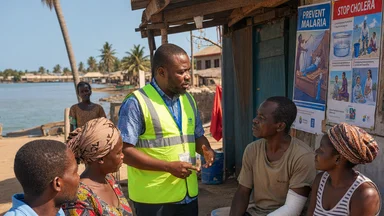
Grace Banda, a 54-year-old maize farmer in Ntcheu district, Malawi, knows her blood pressure is high. She was diagnosed with hypertension in 2023 at Ntcheu District Hospital, where a reading of 180/110 mmHg confirmed what she had suspected from the headaches and dizziness. The hospital prescribed amlodipine, a common blood pressure medication, and told her to return every two months for a refill and check-up. But each visit costs her 1,000 kwacha—roughly $0.58—plus transport to the clinic, which can add another 1,000 kwacha. When the maize harvest is poor or school fees are due, she skips the appointment. “I stay home until I feel sick again,” she says.
A 1,000 Kwacha Threshold Forces Hard Choices
In rural Malawi, public health facilities charge a nominal fee for outpatient services, including hypertension follow-up. The standard fee at many district hospitals and health centers is 1,000 kwacha per visit, though some facilities charge less or more depending on the services. For a family living on subsistence farming, that amount can represent a significant portion of weekly cash income. A 2024 survey of 240 hypertension patients in Ntcheu district found that nearly half had missed at least one scheduled follow-up visit in the previous six months because they could not afford the fee. Among those who missed visits, about 60% reported that the fee itself was the primary barrier, while others cited transport costs or time away from farming. The consequences of missed visits are immediate. Patients who skip appointments often run out of medication before their next refill. Some ration their pills, taking them every other day to stretch supplies. Others borrow from neighbors or relatives who have similar prescriptions, a practice that can lead to incorrect dosing. A missed visit can mean weeks without any medication, allowing blood pressure to climb back to dangerous levels. The survey recorded that patients who missed two or more consecutive visits had an average systolic blood pressure 15 mmHg higher than those who attended regularly.
Health workers at Ntcheu District Hospital say they see the pattern repeatedly. “Patients come in with crises—severe headache, nosebleeds, sometimes stroke symptoms—because they stopped taking their medication after missing a visit,” says a clinical officer at Ntcheu District Hospital. “The fee is small to us, but to them it is a choice between medicine and food.” The 1,000 kwacha fee is not unique to Ntcheu. Across Malawi, district hospitals and health centers charge similar amounts for chronic disease follow-up, though some have waived fees for specific conditions like HIV and tuberculosis. Hypertension, like other non-communicable diseases, remains outside most waiver programs. The result is a system where the poorest patients, who need care most, are priced out of consistent treatment.
Chronically High Blood Pressure, Intermittent Care
Hypertension affects roughly 12% of adults in rural Malawi, according to a 2022 study published in the Malawi Medical Journal. That figure is likely an underestimate, as many people are never screened. The World Health Organization estimates that across sub-Saharan Africa, about 60% of adults with hypertension are undiagnosed, and among those diagnosed, fewer than one in five have their blood pressure controlled. In Malawi, the numbers are starker: a national survey in 2017 found that only 4% of hypertensive adults had achieved blood pressure control.
Lifelong treatment is required for hypertension, but supply chains are fragile. Medications like amlodipine and hydrochlorothiazide are included on Malawi’s Essential Medicines List, but stockouts occur frequently at rural facilities. A 2023 audit of health centers in Ntcheu district found that amlodipine was out of stock for an average of 30 days per quarter. When drugs are unavailable, patients are turned away or given a partial supply, further disrupting care.
The intermittent nature of care means that many patients experience repeated cycles of treatment and abandonment. Each time they restart medication, their blood pressure may take weeks to stabilize, and during that period they are at elevated risk for heart attack, stroke, and kidney damage. A 2024 modeling study by researchers at the University of Malawi estimated that improving treatment continuity to 80% adherence could reduce cardiovascular deaths among hypertensive patients by roughly 30% over five years.
Yet the barriers are not only financial. Distance to facilities, lack of transportation, and competing health priorities—such as malaria or HIV—also contribute to poor adherence. But for many patients, the clinic fee is the most immediate and modifiable barrier. As one patient in the Ntcheu survey put it: “If the visit were free, I would come every time. But when I have to pay, I wait until I am very sick.”
Grace Banda’s Story: A Farmer’s Blood Pressure Log
Grace Banda lives in a village about 15 kilometers from Ntcheu District Hospital. She grows maize and groundnuts on a small plot of land, enough to feed her family but rarely enough to sell for cash. Her husband died five years ago, and she supports three children, two of whom are still in primary school. When she was diagnosed with hypertension, she was given a blood pressure logbook and told to record her readings at home. She does not own a monitor, so she relies on the clinic’s measurements during visits.
In her first year of treatment, she missed three of six scheduled appointments. Each time, she ran out of medication and her blood pressure climbed. On one occasion, she experienced a severe headache and blurred vision, symptoms of hypertensive urgency. A neighbor took her to the hospital on a bicycle, where she was given intravenous medication and told to return in two weeks. She did not return for a month because she could not afford the fee.
“I know I need the medicine. But when I have no money, what can I do?” she says. She has tried to stretch her pills by taking them every other day, but that leaves her feeling dizzy. Her blood pressure log, when she has it, shows readings that fluctuate between 140/90 mmHg and 180/110 mmHg. The clinical officer at Ntcheu says that patients like Grace would benefit from a simpler, cheaper regimen, such as a fixed-dose combination pill that could reduce the number of tablets and possibly the cost.
Grace’s story is emblematic of a broader challenge. Across rural Malawi, thousands of patients with hypertension are trapped in a cycle of episodic care, where small fees and logistical hurdles derail treatment. Without consistent medication, their risk of stroke, heart failure, and kidney disease remains high. The human cost is measured not only in premature deaths but in lost productivity, disability, and the strain on families who must care for ailing relatives.
Fixed-Dose Combination Therapy Could Lower Costs
One promising strategy to improve adherence and reduce costs is the use of fixed-dose combination (FDC) therapy—a single pill containing two or more blood pressure medications. The so-called “triple pill,” which combines amlodipine, telmisartan, and chlorthalidone, has been shown in clinical trials to achieve better blood pressure control than monotherapy or dual therapy, with fewer side effects. A 2023 study in The Lancet found that the triple pill reduced systolic blood pressure by an average of 9 mmHg more than standard care, and adherence rates were significantly higher.
The per-patient cost of the triple pill is estimated at roughly $0.30 per month when purchased at scale, compared to $0.50–1.00 for multiple single-pill regimens. For a patient in rural Malawi, that difference could make treatment affordable even with a small fee. However, Malawi’s Essential Medicines List currently includes only single-pill options—amlodipine, losartan, hydrochlorothiazide—and does not list any FDC products for hypertension. A pilot study in Lilongwe in 2024 tested the triple pill among 200 patients and found that adherence improved by 25% compared to usual care, but the medication had to be imported and cost more than locally available generics.
The World Health Organization has prequalified several low-cost FDCs for hypertension, making them eligible for procurement by global health agencies like the Global Fund and UNICEF. But Malawi has not yet included them in its national procurement list, partly due to concerns about cost and supply chain complexity. Advocates argue that the long-term savings from reduced hospitalizations and complications would outweigh the initial investment. A 2025 cost-effectiveness analysis by the Malawi Ministry of Health estimated that switching to FDCs for all newly diagnosed hypertension patients could prevent about 1,200 strokes and 800 heart attacks over five years, saving roughly $3 million in healthcare costs.
However, some clinicians caution that FDCs are not a panacea. They limit the ability to adjust individual drug doses, and patients who experience side effects may need to switch to a different combination. Moreover, the benefits depend on consistent supply and patient education. Without addressing the underlying barrier of clinic fees, even a cheaper pill may not help patients who cannot afford the visit to obtain it.
Task-Shifting to Community Health Workers Works
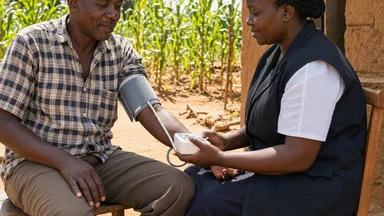
Another approach that has shown promise in Malawi is task-shifting hypertension care to community health workers, known locally as health surveillance assistants (HSAs). Malawi has roughly 11,000 HSAs deployed across the country, each serving a catchment area of about 1,000 households. Traditionally focused on maternal and child health, HIV, and malaria, HSAs are increasingly being trained to measure blood pressure, dispense refills, and provide health education for chronic diseases.
A 2024 cluster randomized trial in Mulanje district tested a model where HSAs provided three-month supplies of amlodipine to patients with stable hypertension, along with home BP monitoring. Patients visited the health center only for initial diagnosis and annual reviews. The results were striking: clinic visits dropped by 70% among participants, while blood pressure control improved compared to the standard care group. The study also found that patient satisfaction was higher, as they saved time and money on travel.
Scaling this model nationally would require additional training, equipment, and supervision for HSAs, as well as a reliable supply of medications at the community level. Malawi’s Health Ministry has piloted a similar program for HIV and tuberculosis, and some districts have begun extending it to hypertension. But funding remains a challenge. A 2025 budget analysis found that the government spends less than $1 per person per year on non-communicable disease care, compared to $15 for HIV/AIDS.
Community health workers can also help address the fee barrier. In some pilot sites, HSAs dispense medications at no charge to the patient, with the cost covered by district health budgets or donor programs. This eliminates the need for patients to pay the clinic fee for refills, though they still must pay for initial diagnosis visits. If the model were expanded, it could effectively bypass the 1,000 kwacha barrier for ongoing care.
Critics note that task-shifting is not appropriate for all patients. Those with resistant hypertension, comorbidities, or complications need physician oversight. But for the majority of patients with uncomplicated hypertension, HSAs can provide safe and effective care. The key is to ensure that referral pathways are clear and that HSAs are supported by a functioning health system.
Patient Education: Empowering Self-Management
Beyond structural changes, patient education plays a critical role in improving hypertension outcomes. Many patients in rural Malawi lack basic knowledge about the nature of hypertension—that it is often symptomless and requires lifelong management. A 2023 study in Ntcheu district found that only 35% of hypertensive patients understood that missing medication could lead to stroke or heart attack. Community health workers can fill this gap by conducting home visits and group sessions on diet, exercise, and medication adherence.
Simple tools like pictorial flipcharts and local-language pamphlets have been shown to improve knowledge. In a pilot program in Machinga district, patients who attended three education sessions had a 20% higher adherence rate than those who did not. However, education alone is insufficient if fees and drug availability remain barriers. Combining education with fee removal and task-shifting could create a comprehensive approach.
One challenge is that health literacy is low overall, and many patients rely on traditional remedies or seek care from informal providers. Training HSAs to address misconceptions—such as that hypertension can be cured by herbal teas—is essential. A 2024 report by the Malawi Health Education Unit recommended integrating hypertension education into existing community health days, which already reach millions of households.
User Fees: A Barrier That Policy Could Remove
Malawi abolished user fees for maternal and child health services in 2006, leading to a sharp increase in facility deliveries and antenatal care visits. Similar policies for chronic diseases could have a comparable impact. A 2023 economic analysis by the University of Malawi estimated that removing user fees for hypertension care would cost the government roughly $2 million per year—about 0.2% of the health budget—but would prevent an estimated 3,000 premature deaths annually from cardiovascular disease. The cost per disability-adjusted life year averted was approximately $45, well below Malawi’s gross domestic product per capita, making it a highly cost-effective intervention.
Several countries in sub-Saharan Africa have already taken steps to eliminate fees for non-communicable diseases. Kenya, for example, includes hypertension medications in its universal health coverage package, and Rwanda has integrated hypertension care into its community-based health insurance scheme. In Malawi, however, chronic disease services remain tied to the fee-for-service model, which disproportionately affects the poor.
The political will to remove fees may be growing. In 2025, the Malawi Ministry of Health announced a pilot program in three districts—Ntcheu, Mulanje, and Lilongwe—to waive user fees for hypertension and diabetes patients. The program is funded by a grant from the World Bank and will be evaluated after one year. Early reports suggest that attendance at hypertension clinics increased by 40% in the first three months, though the data are preliminary.
Opponents of fee removal worry that it could overwhelm facilities with patients, leading to longer wait times and drug stockouts. They also note that the fees generate revenue that helps cover operational costs. However, the revenue from hypertension fees is modest—a hospital may collect a few hundred dollars per month—and the administrative cost of collecting fees may offset the revenue. Moreover, the health and economic benefits of improved adherence likely outweigh the fiscal loss. A 2025 modeling study by the University of Malawi found that even if fee removal led to a 50% increase in clinic visits, the additional workload could be managed by expanding nurse-led clinics and task-shifting to HSAs, as long as drug supplies are increased proportionally.
Three Practical Steps for the Next Five Years
First, include hypertension drugs in Malawi’s free chronic care program, similar to the existing waivers for HIV and tuberculosis. This would eliminate the 1,000 kwacha fee for follow-up visits and refills, removing the most immediate financial barrier. The cost, estimated at $2 million annually, could be covered by reallocating a small fraction of HIV funding or through a dedicated donor grant.
Second, scale up community-based blood pressure monitoring with HSAs, using the Mulanje trial as a model. This would reduce the need for patients to travel to clinics for refills, saving time and transport costs. The government should invest in training, providing BP monitors, and ensuring a reliable supply of medications at the community level. A national rollout could reach an estimated 80% of hypertension patients within three years.
Third, procure triple-pill FDCs through the Global Fund or WHO’s prequalification program, and add them to Malawi’s Essential Medicines List. This would lower the per-patient cost of medication and simplify regimens, improving adherence. The Ministry of Health should conduct a pilot distribution in two districts before national scale-up, with careful monitoring of side effects and supply chain logistics.
These steps are not silver bullets. They require sustained political commitment, funding, and health system strengthening. But they represent achievable goals that could transform the lives of hundreds of thousands of Malawians living with hypertension. Without action, the cycle of missed visits, uncontrolled blood pressure, and preventable complications will continue.
Grace Banda, for her part, hopes that the pilot fee waiver in Ntcheu will be extended. “If I don’t have to pay, I will come every time,” she says. “I want to see my grandchildren grow up.” Her wish is modest, yet it depends on a health system that is only beginning to address the needs of patients with chronic disease. The evidence is clear: removing financial barriers and bringing care closer to home can keep people like Grace healthy. The challenge is to make that the norm, not the exception.
This article reports on research and policy discussions regarding hypertension care in Malawi. It does not provide individual medical advice.