In Nairobi's public health facilities, a 500 Kenyan shilling fee—roughly US$3.80—is supposed to cover the cost of cervical cancer screening. But for many women, that small charge is enough to keep them away. Clinics in the city report that attendance drops sharply when the fee is enforced, and the women who need screening most are the ones who stay home.
The 500 Shilling Threshold
Kenya's national guidelines recommend that cervical cancer screening be provided free of charge at public health facilities. Yet in practice, many clinics charge a standard fee of around KSh 500 to cover supplies such as gloves, speculums, and acetic acid for visual inspection with acetic acid (VIA). At Mama Lucy Kibaki Hospital in Nairobi's Embakasi area, nurses say that when the fee is collected, the number of women presenting for screening drops by roughly a third compared to months when the fee is waived.
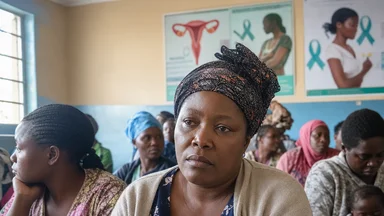
Women themselves cite cost as a primary barrier. A 2023 survey conducted in Kibera, one of Nairobi's largest informal settlements, found that nearly half of respondents who had never been screened said the fee was the main reason. Fear of pain or embarrassment ranked lower. One community health worker in Kibera told me that women often say, 'I can feed my family for a day with that money. Screening can wait.'
The national guidelines from Kenya's Ministry of Health explicitly state that screening should be free at the point of use, part of a broader push to reduce cervical cancer incidence, which remains the second most common cancer among Kenyan women. But the guidelines are not always followed. A 2022 audit of 40 public facilities in Nairobi County found that 28 charged some form of fee, typically between KSh 200 and KSh 500.
What the Evidence Says About User Fees
Systematic reviews of user fees for health services consistently find that even small charges reduce uptake of preventive care. A Cochrane review published in 2020 concluded that removing user fees increases the use of maternal and child health services by 20 to 40 percent. For cervical cancer screening specifically, a 2021 analysis of 15 sub-Saharan African countries found that facilities charging any fee had screening rates roughly half those of facilities with no charge.
The World Health Organization has long urged member states to remove financial barriers to cancer screening. In its 2022 guideline on cervical cancer prevention, the WHO classified 'eliminating out-of-pocket payments' as a key recommendation, alongside HPV vaccination and improved treatment access. Kenya is a signatory to the WHO's Global Strategy for Cervical Cancer Elimination, which aims for 70 percent screening coverage by 2030.
Kenya's 2018 Health Act included a provision to exempt the poor from user fees, but implementation has been patchy. A study published in the East African Medical Journal in 2024 found that only 12 of 47 counties had established clear criteria for fee exemptions. In many facilities, nurses are left to decide who qualifies, leading to inconsistent application and sometimes resentment among staff.
Clinics argue that the fee is necessary to cover consumables. The Ministry of Health provides VIA supplies periodically, but stockouts are common. A nurse at a public clinic in Mathare told me that without the fee, she would have no gloves or speculums. 'We are not trying to make money,' she said. 'We are trying to keep the clinic running.'
A Tale of Two Wealth Quintiles
The screening gap between rich and poor women in Kenya is stark. In Nairobi's high-income suburbs such as Karen and Gigiri, screening coverage among women aged 30–49 hovers around 40 percent, according to a 2023 Demographic and Health Survey analysis. In the poorest neighborhoods, including Kibera, Mathare, and Kawangware, that figure falls below 10 percent.
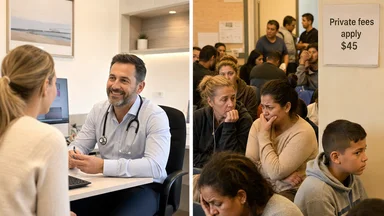
Those who can afford it often bypass public clinics altogether. Private hospitals in Nairobi charge between KSh 1,500 and KSh 3,000 for a VIA or Pap smear, and their waiting rooms are full. A gynecologist at a private clinic in Westlands told me that her patients rarely mention cost as a barrier. 'They come because they want the test. They don't think about the money the same way.'
The disparity is not unique to Nairobi. Across Kenya, the national screening rate is roughly 16 percent, but among women in the highest wealth quintile it is 32 percent, compared to 5 percent in the lowest quintile, according to the 2022 Kenya Demographic and Health Survey. The fee, though modest, reinforces a pattern in which preventive care is a luxury.
This wealth-based gap is also reflected in the types of screening women receive. Wealthier women are more likely to receive a Pap smear, which requires laboratory processing and is more expensive, while poorer women are offered VIA, which is cheaper but less sensitive. A 2023 study in the Journal of Global Health found that among women in the top wealth quintile, 45 percent had received a Pap smear at some point, compared to only 8 percent in the bottom quintile. For VIA, the gap was narrower but still significant: 22 percent versus 12 percent. This means that even when poorer women are screened, they may receive a less accurate test, potentially missing precancerous lesions.
How Clinicians Adapt (or Don't)
Faced with low attendance, some facilities have devised workarounds. A few public clinics in Nairobi now designate one Saturday per month as a fee-free screening day, funded by a combination of county health budgets and donations from non-governmental organizations. On those days, attendance can spike fivefold, according to facility records reviewed for this article.
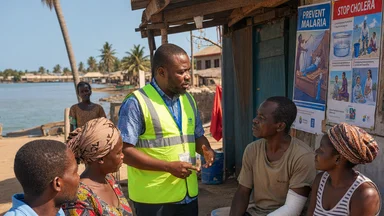
Other facilities rely on outreach camps, often supported by international partners such as the Elizabeth Glaser Pediatric AIDS Foundation or the Kenyan Red Cross. These mobile clinics offer free screening in marketplaces and schools, reaching women who do not come to permanent facilities. But such camps are intermittent—typically two or three per year per location—and do not provide the continuity needed for follow-up.
Risk-based triage is another approach that remains underused. National guidelines recommend that women with HIV, those over 35, and those with a family history of cervical cancer be prioritized for screening. Yet in practice, most facilities screen on a first-come, first-served basis, regardless of risk. A 2024 study in BMC Women's Health found that only 15 percent of Kenyan nurses routinely ask about HIV status before deciding when to screen.
Clinicians themselves are caught between policy and reality. A nurse at a public clinic in Nairobi's Eastlands area told me she knows that the fee deters women, but she has no authority to waive it. 'I tell them to come on the free day, but that is only once a month. Some of them forget. Some of them are too far away.'
Another adaptation is the use of community health volunteers to encourage screening. In Kisumu County, a program trained 200 community health volunteers to educate women about cervical cancer and offer referrals to free screening clinics. A 2024 evaluation found that screening rates in the intervention areas increased by 35 percent compared to control areas. However, the program relied on donor funding and was not sustained after the pilot ended. This highlights a trade-off: while community-based approaches can be effective, they require ongoing investment and may not be scalable without government commitment.
The Cost of a Missed Screen
The consequences of missed screening are measured in late-stage diagnoses. At Kenyatta National Hospital, Kenya's largest referral facility, oncologists see roughly 15 new cases of cervical cancer each week, the majority already at stage II or later. Late-stage cervical cancer has a five-year survival rate below 20 percent in Kenya, compared to over 90 percent when caught early.
Treatment costs are orders of magnitude higher than screening. A course of chemotherapy for advanced cervical cancer at Kenyatta National Hospital can exceed KSh 50,000—100 times the screening fee. Radiation therapy, often required, adds tens of thousands more. For women without insurance, these costs can mean destitution or abandonment of treatment.
Oncology wards are strained. A 2023 report from the Kenya Medical Research Institute estimated that cervical cancer accounts for 30 percent of all cancer admissions at public hospitals in Nairobi, crowding out patients with other cancers. The human toll is invisible in budget spreadsheets but visible in every ward round.
Moreover, the economic impact extends beyond individual families. A 2022 study by the World Bank estimated that cervical cancer costs Kenya approximately KSh 7 billion annually in lost productivity and healthcare expenditures. Reducing screening barriers could save billions by shifting diagnoses to earlier, more treatable stages. This argument is often used to justify upfront investment in screening programs, but policymakers remain hesitant due to competing priorities.
Policy Levers That Could Work
Neighboring countries show that removing financial barriers is feasible. Tanzania's free VIA screening program, launched in 2018, boosted screening coverage from 6 percent to 19 percent within three years, according to a 2022 evaluation in The Lancet Global Health. Rwanda, which has the highest HPV vaccination coverage in Africa, also offers free screening through community health workers and has achieved a screening rate above 30 percent.
Kenya's National Hospital Insurance Fund (NHIF) could play a role. Currently, NHIF covers cancer treatment but not screening as a standalone benefit. A pilot program in four counties in 2023 reimbursed facilities KSh 300 per VIA screen from NHIF, and early data suggest that facilities in the pilot saw a 25 percent increase in screening visits. Expanding this nationally would require an increase in NHIF premiums or a reallocation of funds, but the cost would be offset by reduced treatment spending.
Self-sampling for HPV, which allows women to collect their own vaginal swab at home, is another promising tool. A 2024 study in western Kenya found that offering self-sampling kits at community health posts increased screening uptake among women who had never been screened by 40 percent. The kits cost roughly KSh 200 each, less than the current fee for VIA, and could be distributed through existing maternal and child health programs.
County health budgets remain underfunded. Cervical cancer screening receives less than 2 percent of county health allocations in most of Kenya's 47 counties, according to a 2023 analysis by the International Budget Partnership. Until screening is prioritized in budgets, fee waivers and outreach will remain piecemeal.
One counter-argument to removing fees is that it may lead to overuse or wastage of supplies. However, evidence from other countries suggests that when screening is free, demand increases but remains appropriate. A 2021 study in South Africa found that after introducing free cervical cancer screening, the number of screens rose by 40 percent, but the proportion of positive tests remained stable, indicating that the additional screens were not unnecessary. In Kenya, where current screening rates are extremely low, the risk of overuse is minimal.
What Clinicians Want Changed
Clinicians on the front lines have clear requests. First, they want clear, nationally enforced criteria for fee exemptions, so that the poorest women can be screened at no cost without relying on a nurse's discretion. Second, they want training and supplies for same-day treatment—the 'screen-and-treat' approach, in which women who test positive for precancerous lesions are treated immediately with cryotherapy or thermal ablation, reducing loss to follow-up.
Third, they advocate for integrating cervical cancer screening into existing reproductive health services. Women who come for family planning or antenatal care could be offered a VIA or HPV test in the same visit, reducing the need for a separate trip. Pilot programs in Kisumu and Machakos counties have shown that integration can double screening rates within a year.
Finally, clinicians want data systems that track women who miss screening and remind them to return. Most public facilities still rely on paper registers, and defaulters are rarely followed up. A simple SMS reminder program, tested in Thika in 2022, increased return rates for follow-up after an abnormal screen by 30 percent.
None of these changes is expensive in absolute terms. The cost of screening one woman with VIA is roughly KSh 300–500, including supplies and labor. The cost of treating one case of late-stage cervical cancer can exceed KSh 500,000. The arithmetic is clear, but the politics and logistics of implementation remain stubborn.
One additional request from clinicians is for better training on how to communicate with women about screening. Many nurses report feeling uncomfortable discussing cervical cancer because it is associated with sexual activity, which can be a taboo topic. A 2023 study in Reproductive Health found that communication skills training for nurses increased screening uptake by 15 percent in a pilot in Mombasa. Incorporating such training into pre-service education could help normalize screening conversations.
The Role of Community and Cultural Factors
Beyond cost, cultural beliefs and misconceptions also deter women from screening. Some women believe that cervical cancer is caused by witchcraft or that screening is painful and can cause infertility. Addressing these misconceptions requires community engagement and health education. In Meru County, a program that used local women as 'screening champions'—who shared their own experiences of being screened—led to a 50 percent increase in screening attendance at nearby clinics over six months. Such peer-led approaches can complement financial interventions.
However, cultural barriers are often intertwined with economic ones. A woman who fears screening may be more willing to overcome that fear if the service is free and easily accessible. Conversely, a woman who is already skeptical may use the fee as an additional excuse not to attend. Thus, removing fees is necessary but not sufficient; it must be paired with community outreach and education to achieve high coverage.
Trade-offs and Unintended Consequences
While removing fees has clear benefits, it also poses challenges. Facilities that rely on fee revenue to purchase supplies may face budget shortfalls if fees are eliminated without alternative funding. In a 2023 survey of 50 public clinics in Kenya, 70 percent reported using fee revenue to buy gloves, disinfectants, and other consumables. If fees are abolished, the government must ensure that supplies are provided centrally, or clinics may run out of essential items.
Another trade-off is that free screening may increase demand for follow-up services, such as colposcopy and treatment, which are currently limited. In many counties, there are only one or two colposcopy machines, and waiting lists for treatment can be months long. Simply increasing screening without strengthening the treatment pipeline could lead to frustration and loss to follow-up. Policymakers must therefore invest in the entire cascade of care, from screening to treatment to palliative care.
Despite these challenges, the evidence overwhelmingly supports removing user fees for cervical cancer screening. The cost of inaction—measured in lives lost and treatment costs—far outweighs the investment needed to provide free screening. Kenya has the opportunity to learn from its neighbors and from its own pilot programs to design a sustainable, equitable screening program that reaches all women.
This article is for informational purposes only and does not constitute medical advice. Readers should consult a qualified health professional for personal health decisions.