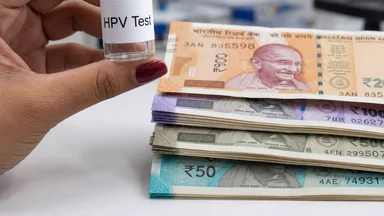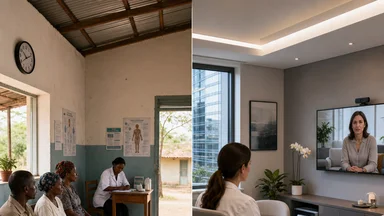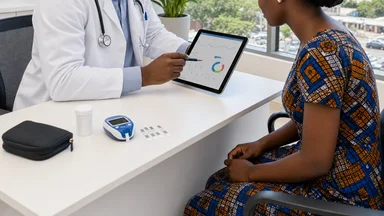
In India, a woman seeking a routine cervical cancer screening faces a stark choice that has little to do with her risk of disease and everything to do with her wallet. A Pap smear at a government laboratory costs roughly ₹150. At a private pathology chain, the same slide preparation and cytology reading can be billed at ₹1,500 to ₹2,000 — a tenfold difference. The gap widens for the more sensitive HPV DNA test: public-sector facilities charge around ₹500, while private labs quote ₹5,000 or more. This cost disparity is not an anomaly; it is a structural feature of India's two-tiered healthcare system, with direct consequences for who gets screened, who gets treated, and who survives.
A Ten-Fold Gap in Cervical Cancer Screening Costs
Cervical cancer is the second most common cancer among women in India, with an estimated 120,000 new cases per year. Screening by Pap smear or HPV DNA testing can detect precancerous lesions early, reducing mortality by 30–50%. Yet screening coverage remains low — roughly 2% of eligible women undergo regular screening, according to a 2021 Lancet study. Cost is a major reason.
The price list at a typical municipal corporation lab in Delhi reads: Pap smear ₹150, HPV DNA test ₹500. At a private lab in the same city, the same tests cost ₹1,500 and ₹5,000, respectively. For a woman earning ₹300 per day as a domestic worker, the private-sector price for an HPV test represents more than two weeks' wages. Even the public-sector Pap smear, though cheap, may be out of reach when transport and lost wages are factored in.
The tenfold gap is not limited to metro cities. In tier-2 cities such as Lucknow or Patna, private labs charge ₹1,200–₹1,800 for a Pap smear, while district hospital labs offer it for ₹100–₹150. Rural women often travel to district headquarters for screening, adding ₹200–₹500 in transport costs. A 2023 study in the Indian Journal of Medical Research found that out-of-pocket expenditure for cervical cancer screening in private setups was 8–12 times higher than in public facilities across five states.
This price disparity pushes poor women toward delayed diagnosis. A woman who cannot afford a private HPV test may skip screening altogether, or wait until symptoms appear — by which time the cancer has often advanced. The result is a higher proportion of late-stage diagnoses among low-income women, contributing to India's cervical cancer mortality rate of roughly 75 per 100,000 women, one of the highest in the world.
Why Public Labs Can Keep Prices Low
Public laboratories operate on a fundamentally different economic model than private ones. The government covers the cost of reagents, cytotechnicians, and pathologists through the National Health Mission and state health budgets. Laboratories in district hospitals and community health centres do not need to generate a profit; their mandate is to provide services at nominal cost.
Bulk procurement through state tenders drives down the price of consumables. For example, the HPV DNA test kit that costs ₹800–₹1,000 in the open market can be procured by the government for ₹300–₹400 per test. Similarly, Pap smear slides and staining reagents are bought in large volumes at negotiated rates. These savings are passed directly to the patient.
Another key factor is that public lab staff are salaried employees, not paid per test. A cytotechnician at a government lab earns a fixed monthly salary regardless of how many slides she reads. In contrast, private labs often pay pathologists a fee per slide — typically ₹200–₹500 — which adds to the per-test cost.
The National Health Mission also funds periodic screening camps, where women are screened free of cost using visual inspection with acetic acid (VIA) or Pap smear. These camps absorb the overhead costs of equipment and transport, further reducing the price for the individual. In 2023, the government launched the 'Screening for Non-Communicable Diseases' programme, which includes cervical cancer screening at primary health centres for a nominal fee of ₹50–₹100.
However, public labs face their own challenges. Long waiting times — often 2–4 weeks for results — and limited operating hours discourage many women. A 2022 survey in Rajasthan found that 60% of women who had a Pap smear at a public lab did not return for results. The low price comes at the cost of convenience and follow-up.
What Drives Private Lab Charges Higher
Private laboratories operate as businesses. They must cover rent, equipment amortisation, marketing, and staff salaries — all while generating a profit margin of 20–40%. These overheads are built into the test price.
Rent for a lab in a prime urban location can exceed ₹1 lakh per month. High-end equipment such as liquid-based cytology processors and HPV genotyping platforms cost several lakhs of rupees and are amortised over a few years. Marketing expenses — including promotional materials, free health camps, and commissions to referring doctors — add another layer of cost.
Private labs also differentiate themselves through speed. A Pap smear result that takes 72 hours at a public lab can be delivered in 24 hours at a private facility for an extra fee. Similarly, HPV genotyping, which identifies the specific viral subtype, adds ₹1,000–₹2,000 to the basic HPV test. For patients who want same-day results or a detailed report, these premiums are justified by the convenience.
Pathologist fees are a significant cost driver. While a government pathologist is salaried, private labs typically pay ₹200–₹500 per slide interpretation. For a busy lab processing 100 Pap smears a day, that alone amounts to ₹20,000–₹50,000 daily in professional fees. Add to this the cost of quality control — many private labs participate in external proficiency testing programmes — and the per-test price climbs further.
Not all private labs charge the same rates. Chains with high volumes can negotiate lower reagent costs and may offer discounts. A 2024 analysis by the Public Health Foundation of India found that large private lab networks charged 15–30% less than standalone labs for the same test. But even the discounted price is several times the public-sector rate.
The Clinical Impact of Cost Disparity
The price gap translates directly into clinical outcomes. A woman who receives an abnormal Pap smear result from a public lab is advised to undergo colposcopy — a procedure that costs ₹500–₹1,000 at a government hospital but ₹2,000–₹4,000 at a private clinic. If she cannot afford the follow-up, the screen becomes a wasted opportunity.
A 2020 study at the All India Institute of Medical Sciences (AIIMS) in New Delhi found that 40% of women who had an abnormal Pap smear at a private lab were lost to follow-up, compared to 20% of those screened at the public lab. The primary reason cited was cost. The study estimated that each delayed colposcopy increased the average stage at diagnosis by 0.5 steps, reducing five-year survival from 90% to 70%.
HPV DNA testing, which is more sensitive than Pap smear, is recommended by the World Health Organization as the primary screening method. But its high private-sector cost makes it inaccessible to most women. A 2022 study in Maharashtra reported that only 12% of women from low-income households had ever had an HPV test, compared to 45% of women from high-income households. The cost difference was the main barrier.
The disparity is also geographic. In tier-2 cities like Indore or Coimbatore, private lab charges for a Pap smear can be ₹1,800–₹2,200, while the same test costs ₹150 at the district hospital. Yet many women do not know about the public option, or they perceive government services as low-quality. A 2021 survey in Tamil Nadu found that 30% of women who paid for a private Pap smear were unaware that a cheaper public alternative existed.
The financial burden does not end with screening. If cancer is detected, treatment costs — surgery, radiation, chemotherapy — can run into lakhs of rupees. A woman who delays screening due to cost may end up with a more expensive and less effective treatment, perpetuating a cycle of poverty and disease.
System Workarounds Patients and Doctors Use
In response to the cost barrier, clinicians and patients have developed workarounds. Some doctors refer patients to public labs for screening but use private labs for confirmation. A 2023 study published in the Indian Journal of Public Health documented that in a low-income area of Mumbai, a general practitioner sent all her patients for a free Pap smear at the municipal corporation lab, and only those with abnormal results were advised to go to a private lab for HPV testing. This two-step approach reduces costs for most women.
Non-governmental organisations have stepped in to fill the gap. Mobile screening vans operated by organisations such as the Indian Cancer Society offer free VIA and Pap smear camps in rural areas. These vans visit villages on a rotating schedule, reducing transport costs. Some NGOs also provide subsidised HPV tests for ₹200–₹300, using donated kits.
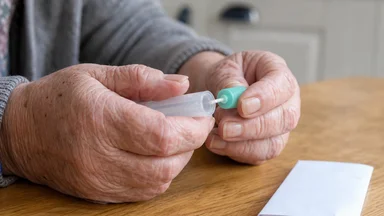
Self-sampling HPV kits are another innovation. A woman can collect a vaginal swab at home and mail it to a lab, avoiding a clinic visit. Several private companies offer these kits for ₹800–₹1,200 — still cheaper than a clinic-based HPV test but more expensive than the public option. A 2023 pilot in Karnataka found that self-sampling increased screening uptake by 25% among women who had never been screened.
Community health workers, known as ASHAs (Accredited Social Health Activists), play a crucial role in navigating women to free screening camps. They are trained to explain the importance of screening and to accompany women to the nearest public lab. In some districts, ASHAs are given a small incentive for each woman they bring for screening, which has improved coverage.
A few private labs have introduced sliding-scale fees for low-income patients. For example, a lab in Hyderabad charges ₹500 for a Pap smear for women earning below ₹10,000 per month, compared to ₹1,500 for others. However, such programmes are not widespread, and patients often must know to ask for a discount.
Policy Levers That Could Narrow the Gap
Several policy measures could reduce the cost disparity. Capping private lab charges under the Clinical Establishments Act, 2010, is one option. The Act allows state governments to set maximum rates for diagnostic tests, but implementation has been patchy. Only a few states, such as Delhi and Karnataka, have notified rate schedules for cancer screening tests. A national cap on Pap smear and HPV test prices would bring down private-sector costs.
Expanding public-private partnerships could also help. Under the Pradhan Mantri Jan Arogya Yojana (Ayushman Bharat), which provides health insurance for poor families, the HPV DNA test could be included as a covered screening service. Currently, the scheme covers treatment for cervical cancer but not screening. Including screening would reduce out-of-pocket costs for millions of women.
Standardising test pricing across districts is another measure. A 2022 report by the National Health Systems Resource Centre found that the price of a Pap smear varied by ₹500–₹1,000 across neighbouring districts in Uttar Pradesh. A uniform pricing policy would reduce confusion and help patients compare costs.
Increasing public lab capacity — by hiring more cytotechnicians and upgrading equipment — would reduce waiting times and improve the patient experience. The government's recent decision to set up 150 new district-level cytology labs under the National Cancer Screening Programme is a step in the right direction, but funding remains a constraint.
Finally, price transparency initiatives could empower patients. A mobile app that lists the cost of screening tests at nearby labs — both public and private — would allow women to choose the most affordable option. Some states have started publishing lab rates on health department websites, but awareness is low.
Patient Navigation and Choice
For a woman in India, the first step in cervical cancer screening involves understanding the available options. Doctors may refer samples to either a public or private lab, and patients can inquire about the destination. Knowing the price difference — ₹150 vs ₹1,500 — allows for informed decision-making. If the public lab is too far or has a long waiting time, a middle-ground option is a charitable hospital or NGO-run clinic, which may charge ₹300–₹500 for a Pap smear. For HPV testing, self-sampling kits offer a cheaper alternative to clinic-based tests, though they are not yet widely available.
The cost of screening should not decide a woman's survival. Early detection works only if the test is affordable. The tenfold gap between public and private labs is a symptom of a system that places the burden of cost on the patient. Until policy measures narrow this gap, women will continue to make choices based on price rather than risk — and that is a failure of public health.
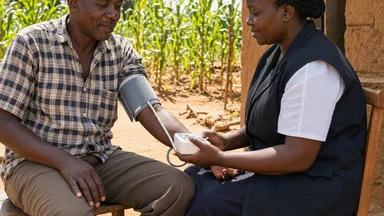
Similar disparities exist in other areas of healthcare. For instance, hypertension diagnosis is missed in half of rural Kenyan men over forty due to limited access to affordable screening. And in breast cancer, screening interval varies by payer while outcomes converge, showing that cost-driven delays are not unique to cervical cancer.
This article is for informational purposes only and does not constitute medical advice. Screening decisions should be made in consultation with a qualified healthcare provider.